The speed of a Quad ATV, often a topic of great interest among enthusiasts and potential buyers, is influenced by a multitude of factors. As a Quad ATV supplier, I've had the opportunity to closely observe and understand these elements that determine just how fast these vehicles can go.
Engine Power
One of the most significant factors affecting the speed of a Quad ATV is its engine power. Generally, the larger the engine displacement, the more power it can generate, which usually translates to higher speeds. For instance, ATVs with small engines, say around 50cc - 110cc, are often designed for beginners, children, or those who need a more leisurely ride. These smaller - engine ATVs typically have a top speed ranging from 15 - 30 miles per hour. They are great for learning the basics of ATV operation and for use in areas where high - speed riding is not appropriate, such as in small private tracks or family - owned properties.
On the other hand, mid - sized ATVs with engine displacements between 250cc - 500cc can reach speeds of 40 - 60 miles per hour. These are more suitable for recreational riders who want a bit more excitement and can handle a faster - moving vehicle. They offer a good balance between power and manageability, making them popular for trail riding and off - road adventures.
High - performance Quad ATVs, with engine displacements of 700cc or more, are built for speed demons. Some of these can achieve top speeds in excess of 70 miles per hour. They are often used in competitive racing events and by experienced riders who are looking for an adrenaline - pumping experience. However, it's important to note that riding at such high speeds requires a high level of skill and safety precautions.
Vehicle Weight
The weight of the Quad ATV also plays a crucial role in determining its speed. A heavier ATV will generally require more power to move and accelerate compared to a lighter one. Manufacturers are constantly looking for ways to reduce the weight of their ATVs without sacrificing strength and durability. This can involve using lightweight materials such as aluminum frames and plastic body panels.
For example, if two ATVs have the same engine power, but one is significantly heavier due to additional features or a more robust construction, the lighter one will likely be faster. A lighter ATV can also handle better, as it is more responsive to steering inputs and can change directions more quickly.
Terrain Conditions
The type of terrain on which the Quad ATV is being ridden has a profound impact on its speed. On flat, smooth surfaces like a paved track, an ATV can reach its maximum potential speed. However, in off - road conditions, the speed is often limited.
In muddy or sandy terrains, the ATV has to work harder to move through the soft ground. The wheels can sink, causing resistance and reducing the vehicle's speed. In these conditions, even a high - performance ATV may struggle to reach its top speed. Rocky terrains also pose challenges, as the ATV has to navigate over uneven surfaces, which requires slower speeds for safety and to prevent damage to the vehicle.
On hilly terrains, the incline or decline affects the speed. Going uphill, the ATV has to work against gravity, which reduces its speed. Going downhill, the vehicle can gain speed quickly, but the rider has to be careful not to lose control.
Tire Type and Condition
The tires of a Quad ATV are its contact with the ground, and their type and condition can significantly affect the speed. Different tire tread patterns are designed for different terrains. For example, tires with deep, aggressive treads are better for off - road use, as they provide better traction in mud, sand, and rocky terrains. However, these tires may not be as efficient on paved surfaces, as the deep treads can create more rolling resistance, reducing the speed.
Slick tires, on the other hand, are designed for high - speed performance on smooth surfaces. They have less tread, which reduces rolling resistance and allows the ATV to move more freely. The condition of the tires also matters. Worn - out tires with low tread depth can reduce traction and increase the risk of skidding, especially at high speeds.
Safety Considerations
While speed can be exciting, safety should always be the top priority when riding a Quad ATV. High - speed riding requires appropriate safety gear, including a helmet, goggles, gloves, and protective clothing. Riders should also have proper training and experience to handle the vehicle at high speeds.


In addition, local laws and regulations regarding ATV riding should be followed. Some areas have speed limits for ATVs, especially in public lands or near residential areas. As a supplier, I always encourage my customers to ride responsibly and to prioritize safety over speed.
Our Product Range
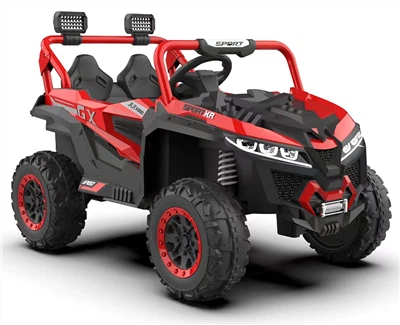
We offer a wide range of Quad ATVs to suit different needs and preferences. Our 12V All Terrain Beach Off - road Vehicle is a great option for beginners and those who want a fun, easy - to - ride ATV. It is designed to handle various terrains, including beaches, and has a reasonable speed for a safe and enjoyable experience.
Our 12V OFF - ROAD BEACH BIKES RIDE ON is another popular choice. It offers a balance between performance and safety, with features that make it suitable for both recreational riders and those who want to explore off - road areas.
For those looking for a more unique option, our BEACH CAR WITH OR NOT TRUNK provides the functionality of a trunk, which can be useful for carrying items during a ride.
If you are interested in purchasing a Quad ATV, we are here to help you find the right one for your needs. Our team of experts can provide you with detailed information about the speed capabilities, features, and performance of our different models. We also offer after - sales support to ensure that you have a great experience with your ATV.
Whether you are a beginner looking for a slow - paced, safe ride or an experienced rider seeking high - speed thrills, we have the perfect Quad ATV for you. Contact us to start the purchasing process and take your off - road adventures to the next level.
References
- "ATV Rider's Handbook" - A comprehensive guide on ATV operation, safety, and performance.
- Manufacturer specifications and brochures for various Quad ATV models.
- Industry research reports on ATV design, performance, and market trends.