

In recent years, environmental friendliness has become a significant concern across various industries, and the automotive sector is no exception. As a supplier of ABARTH Go Karts, I often find myself answering the question: "Is the ABARTH Go Kart environmentally friendly?" To address this query comprehensively, we need to delve into multiple aspects, including the energy sources, manufacturing processes, and end - of - life disposal of these go - karts.
Energy Sources of ABARTH Go Karts
ABARTH Go Karts come in different models, some of which are powered by traditional internal combustion engines, while others are electric. Let's start with the internal combustion engine models. These go - karts typically run on gasoline or a gasoline - oil mixture. Gasoline combustion releases carbon dioxide (CO₂), a greenhouse gas that contributes to global warming. Additionally, other pollutants such as nitrogen oxides (NOₓ), carbon monoxide (CO), and particulate matter are also emitted during the combustion process. These pollutants can have detrimental effects on air quality and human health, especially in areas with high go - kart track usage.
On the other hand, the electric ABARTH Go Karts offer a more environmentally friendly alternative. Electric go - karts are powered by rechargeable batteries, usually lithium - ion batteries. When in operation, they produce zero tailpipe emissions. This means that they do not release harmful pollutants into the air at the point of use. The environmental impact of electric go - karts, however, is not entirely zero. The production of electricity used to charge the batteries can have an environmental footprint, depending on the energy mix of the power grid. If the electricity is generated from coal - fired power plants, a significant amount of CO₂ and other pollutants are released during the electricity generation process. But if the power comes from renewable sources such as solar, wind, or hydroelectric power, the overall environmental impact of electric ABARTH Go Karts can be significantly reduced.
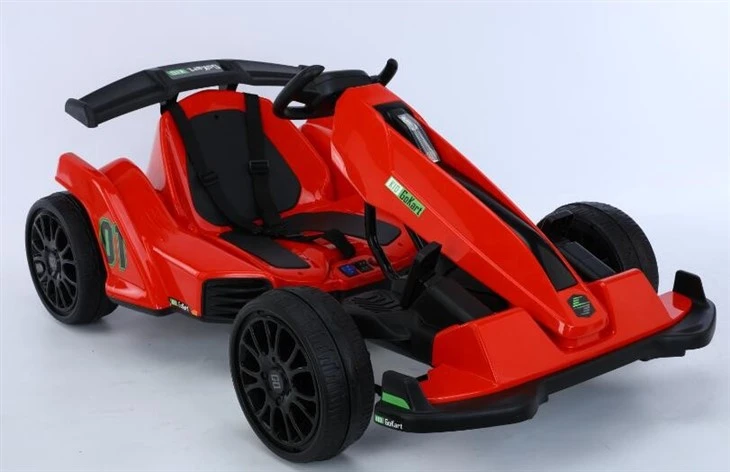
For example, our 12V GO GART CAR is an electric model. It provides a thrilling racing experience while being more gentle on the environment compared to its gasoline - powered counterparts. The 12V battery system is designed for efficiency, allowing for longer run - times with fewer recharges.
Manufacturing Processes
The manufacturing process of ABARTH Go Karts also plays a crucial role in determining their environmental friendliness. To start with, the extraction of raw materials is an energy - intensive process. Metals such as steel and aluminum, which are commonly used in go - kart frames, require large amounts of energy for mining and refining. However, many manufacturers, including those of ABARTH Go Karts, are taking steps to improve the sustainability of their supply chains.
Recycling is an important aspect of sustainable manufacturing. By using recycled metals in the production of go - karts, the demand for virgin raw materials can be reduced. This not only conserves natural resources but also reduces the energy consumption associated with mining and refining. Moreover, modern manufacturing techniques are being employed to minimize waste during the production process. For instance, precision cutting and forming technologies ensure that the materials are used more efficiently, reducing the amount of scrap generated.
Our 12V The Founder Of Go Garts Ride On Car is manufactured with a focus on sustainability. The design team has optimized the use of materials, ensuring that every component is used to its fullest potential, thereby reducing waste and the overall environmental impact of the manufacturing process.

End - of - Life Disposal
The end - of - life disposal of ABARTH Go Karts is another critical factor in assessing their environmental friendliness. When a go - kart reaches the end of its useful life, proper disposal is essential to prevent environmental pollution. For internal combustion engine go - karts, the engine oil, gasoline, and other fluids need to be drained and disposed of properly to avoid soil and water contamination.
In the case of electric go - karts, the batteries are a major concern. Lithium - ion batteries, if not disposed of correctly, can release toxic chemicals into the environment. However, many regions have established recycling programs for lithium - ion batteries. These programs aim to recover valuable metals such as lithium, cobalt, and nickel from the batteries, reducing the need for new mining operations.
As a supplier, we encourage our customers to participate in recycling programs. We also work with recycling partners to ensure that the go - karts and their components are recycled in an environmentally responsible manner. Our 12V Universal Draft Go Kart is designed with disassembly in mind, making it easier to separate different components for recycling at the end of its life.
Comparing with Other Recreational Vehicles
When comparing ABARTH Go Karts with other recreational vehicles, such as dirt bikes or ATVs, the environmental impact can vary. Dirt bikes and ATVs are often powered by high - performance internal combustion engines that consume a relatively large amount of fuel and emit significant amounts of pollutants. In contrast, electric ABARTH Go Karts have a much lower carbon footprint during operation.
However, it's important to note that the overall environmental impact also depends on the frequency and intensity of use. If a go - kart is used for long hours every day on a track, its cumulative environmental impact can be substantial. But in general, for short - term, recreational use, ABARTH Go Karts, especially the electric models, can be a more environmentally friendly option.
The Future of ABARTH Go Karts and Environmental Sustainability
The future of ABARTH Go Karts looks promising in terms of environmental sustainability. As battery technology continues to improve, the range and performance of electric go - karts will increase, making them even more competitive with internal combustion engine models. Additionally, the development of more efficient manufacturing processes and the use of sustainable materials will further reduce the environmental impact of these vehicles.
Manufacturers are also exploring the use of alternative energy sources, such as hydrogen fuel cells, for future go - kart models. Hydrogen fuel cells produce electricity through a chemical reaction between hydrogen and oxygen, with water as the only by - product. This technology has the potential to make go - karts completely emissions - free.
Conclusion and Call to Action
In conclusion, the environmental friendliness of ABARTH Go Karts depends on several factors, including the energy source, manufacturing processes, and end - of - life disposal. While internal combustion engine models have a relatively high environmental impact due to emissions, electric models offer a more sustainable alternative, especially when charged with renewable energy.
As a supplier, we are committed to promoting environmental sustainability in every aspect of our business. We strive to offer high - quality, environmentally friendly ABARTH Go Karts to our customers. If you are interested in purchasing our go - karts for your track, amusement park, or personal use, we welcome you to contact us for a detailed discussion on our product range and how we can meet your specific needs. Let's work together to enjoy the thrill of go - karting while minimizing our impact on the environment.
References
- International Council on Clean Transportation. (2023). Emissions from Small Engines.
- European Commission. (2022). Sustainable Manufacturing in the Automotive Sector.
- United Nations Environment Programme. (2021). Recycling of Lithium - Ion Batteries.


