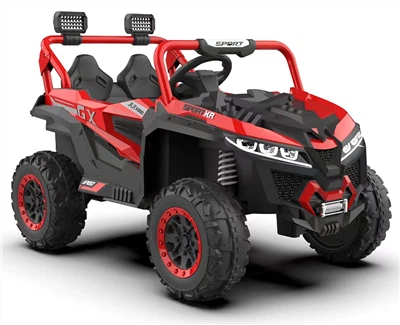
Acceleration is a fundamental concept in the world of vehicles, and when it comes to Beach Buggy UTVs, understanding this metric is crucial for both enthusiasts and potential buyers. As a Beach Buggy UTV supplier, I've had the privilege of delving deep into the intricacies of these vehicles, and I'm excited to share my knowledge about their acceleration.
Defining Acceleration
Before we dive into the specifics of Beach Buggy UTV acceleration, let's first clarify what acceleration means. In physics, acceleration is defined as the rate of change of velocity with respect to time. In simpler terms, it's how quickly a vehicle can increase its speed. It's typically measured in meters per second squared (m/s²) or in more common automotive terms, miles per hour per second (mph/s).
Factors Affecting the Acceleration of Beach Buggy UTVs
Several factors come into play when determining the acceleration of a Beach Buggy UTV. These include the engine power, vehicle weight, transmission type, and tire traction.
Engine Power
The engine is the heart of any vehicle, and in the case of Beach Buggy UTVs, a more powerful engine generally means better acceleration. Engines are rated in horsepower (hp), which is a measure of the power output. A higher horsepower engine can generate more force, allowing the UTV to accelerate more quickly. For example, a UTV with a 100 hp engine will typically accelerate faster than one with a 50 hp engine, all other factors being equal.


Vehicle Weight
The weight of the UTV also plays a significant role in its acceleration. Heavier vehicles require more force to accelerate, so a lighter Beach Buggy UTV will generally have better acceleration than a heavier one. Manufacturers often use lightweight materials such as aluminum and carbon fiber to reduce the weight of the vehicle without sacrificing strength.
Transmission Type
The transmission is responsible for transferring the power from the engine to the wheels. There are several types of transmissions used in Beach Buggy UTVs, including manual, automatic, and continuously variable transmissions (CVT). Each type has its own advantages and disadvantages when it comes to acceleration. Manual transmissions allow the driver to have more control over the gear selection, which can be beneficial for quick acceleration. Automatic transmissions, on the other hand, are more convenient and can provide smooth acceleration. CVTs offer a seamless transition between gears, resulting in efficient and consistent acceleration.
Tire Traction
Tire traction is essential for transferring the power from the engine to the ground. Without proper traction, the UTV's wheels will spin, and the vehicle will not accelerate effectively. Beach Buggy UTVs are typically equipped with specialized tires designed for off-road use, which provide better traction on sand, mud, and other uneven surfaces. The type of tire tread, tire pressure, and tire size can all affect the traction and, consequently, the acceleration of the UTV.
Measuring the Acceleration of Beach Buggy UTVs
There are several ways to measure the acceleration of a Beach Buggy UTV. One common method is to use a stopwatch to time how long it takes for the vehicle to reach a certain speed, such as 0 to 60 mph. Another method is to use a dynamometer, which measures the power output of the engine and can calculate the acceleration based on the vehicle's weight and other factors.
In real-world conditions, the acceleration of a Beach Buggy UTV can vary depending on the terrain, weather conditions, and the driver's skill. For example, a UTV may accelerate more quickly on a flat, dry surface than on a sandy beach or a muddy trail.
Comparing the Acceleration of Different Beach Buggy UTV Models
As a Beach Buggy UTV supplier, I've had the opportunity to test and compare the acceleration of different models. Here are some examples of popular Beach Buggy UTV models and their approximate acceleration times:
- Model A: This UTV is equipped with a 150 hp engine and has a relatively lightweight design. It can accelerate from 0 to 60 mph in approximately 5 seconds.
- Model B: With a 100 hp engine and a heavier body, this UTV takes around 7 seconds to reach 60 mph from a standstill.
- Model C: This model features a CVT transmission and a 120 hp engine. It offers smooth acceleration and can reach 60 mph in about 6 seconds.
These are just examples, and the actual acceleration times may vary depending on the specific configuration of the UTV and the testing conditions.
Importance of Acceleration in Beach Buggy UTVs
Acceleration is not just about speed; it also affects the overall performance and safety of the UTV. A UTV with good acceleration can quickly get out of dangerous situations, such as when crossing a busy road or avoiding an obstacle. It also provides a more exciting and enjoyable driving experience, especially for off-road enthusiasts.
Our Beach Buggy UTV Offerings
At our company, we offer a wide range of Beach Buggy UTVs with different engine powers, weights, and transmission types to suit the needs and preferences of our customers. Whether you're looking for a high-performance UTV with lightning-fast acceleration or a more budget-friendly option, we have something for you.
We have the 24 VOLT UTV ELECTRIC CAR, which is perfect for those who want an eco-friendly option with decent acceleration. Our 12V Beach UTV Ride On Car is a great choice for younger riders or those on a tight budget. And if you're looking for something a bit different, our 24V Drift Tricycle offers a unique and exciting riding experience.
Contact Us for Purchasing
If you're interested in purchasing a Beach Buggy UTV, we'd love to hear from you. Our team of experts can help you choose the right UTV based on your needs and budget. We offer competitive prices, excellent customer service, and a wide range of accessories to enhance your UTV experience. Contact us today to start the purchasing process and take your off-road adventures to the next level.
References
- Automotive Engineering Handbook, Second Edition
- SAE International Journal of Passenger Cars - Mechanical Systems
- Off-Road Vehicle Technology Magazine