Hey there, off - road enthusiasts! As a supplier of Off Road Ride On vehicles, I've been getting a lot of questions about the cooling systems in these bad boys. So, I thought I'd break it down for you in this blog.
Let's start with the basics. Why do off - road ride - on vehicles need a cooling system? Well, just like any other motorized vehicle, the engines in these off - roaders generate a ton of heat when they're running. If that heat isn't managed properly, it can cause all sorts of problems, like engine overheating, reduced performance, and even permanent damage to the engine components.
There are mainly two types of cooling systems used in off - road ride - on vehicles: air - cooled and liquid - cooled systems.
Air - Cooled Systems
Air - cooled systems are pretty straightforward. They rely on the flow of air over the engine to dissipate heat. The engine in an air - cooled off - road ride - on vehicle usually has fins on its surface. These fins increase the surface area of the engine, allowing more air to come into contact with it. As the vehicle moves, air rushes over these fins, carrying away the heat.
One of the big advantages of air - cooled systems is their simplicity. There are fewer parts involved compared to liquid - cooled systems, which means there's less that can go wrong. They're also lighter, which can be a plus for off - road vehicles where weight is a factor. For example, our 12V MINI OFF ROADER uses an air - cooled system. It's perfect for young riders who want to have some off - road fun without the complexity of a more advanced cooling system.
However, air - cooled systems do have their limitations. They're not as efficient as liquid - cooled systems, especially in hot weather or when the vehicle is under heavy load. If you're using the off - road ride - on for extended periods or in really hot conditions, an air - cooled engine might overheat more easily.


Liquid - Cooled Systems
Liquid - cooled systems, on the other hand, use a liquid (usually a mixture of water and antifreeze) to transfer heat away from the engine. The liquid circulates through a series of channels in the engine block, absorbing heat as it goes. Then, it flows to a radiator, which is basically a heat exchanger. The radiator has a large surface area with lots of small tubes and fins. As air passes through the radiator, it cools the liquid, which then returns to the engine to absorb more heat.
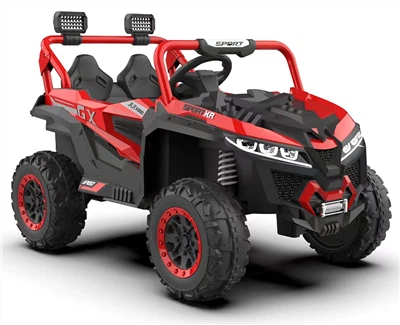
The main advantage of liquid - cooled systems is their efficiency. They can keep the engine at a more stable temperature, even under extreme conditions. This is great for more powerful off - road ride - on vehicles that are designed for longer rides and more challenging terrains. Our 12V Big Wheels Off Roader comes with a liquid - cooled system. It can handle rough off - roading and high - speed runs without the risk of overheating.
But liquid - cooled systems are more complex and expensive. They require a radiator, a water pump to circulate the liquid, hoses, and a reservoir to hold the coolant. There's also a higher risk of leaks, which can lead to engine damage if not addressed quickly.
Components of a Cooling System
No matter which type of cooling system your off - road ride - on vehicle has, there are some common components that play crucial roles.
- Thermostat: This little device acts like a gatekeeper. It regulates the flow of coolant through the engine. When the engine is cold, the thermostat stays closed, allowing the engine to warm up quickly. Once the engine reaches the optimal operating temperature, the thermostat opens, allowing coolant to flow through the radiator to cool down.
- Coolant: As I mentioned earlier, coolant is a mixture of water and antifreeze. The antifreeze not only lowers the freezing point of the liquid but also raises its boiling point. This means it can work effectively in a wide range of temperatures, from cold winter days to hot summer afternoons.
- Radiator Fan: In a liquid - cooled system, the radiator fan helps to draw air through the radiator when the vehicle is moving slowly or is stationary. This ensures that the coolant in the radiator gets cooled even when there isn't enough natural airflow.
Maintenance of Cooling Systems
Proper maintenance of the cooling system is essential to keep your off - road ride - on vehicle running smoothly.
For air - cooled systems, you should regularly clean the fins on the engine. Dirt and debris can accumulate on the fins, reducing their ability to dissipate heat. You can use a soft brush or compressed air to clean them.
In a liquid - cooled system, you need to check the coolant level regularly. If it's low, you should add more coolant. You also need to flush and replace the coolant according to the manufacturer's recommendations. This helps to remove any contaminants that can build up over time and cause corrosion in the system.
Conclusion
So, there you have it! That's a rundown of the cooling systems in off - road ride - on vehicles. Whether you're looking for a simple air - cooled vehicle like our 12V MINI OFF ROADER or a more powerful liquid - cooled one like the 12V Big Wheels Off Roader, understanding the cooling system is key to getting the most out of your off - road experience.
If you're interested in purchasing an off - road ride - on vehicle or have any questions about our products, feel free to reach out to us. We're always happy to help you find the perfect vehicle for your needs and give you tips on maintaining its cooling system. And don't forget to check out our 12V MIDDLE SUV Ride On Car as well!
References
- Automotive Engineering Textbooks
- Manufacturer's Manuals for Off - Road Ride On Vehicles