

As a supplier of 24V Drift Go Karts, one of the most frequently asked questions I encounter is about the power consumption of these thrilling vehicles. Understanding power consumption is crucial for both consumers and operators, as it impacts running costs, battery life, and overall performance. In this blog post, I'll delve into the factors that influence the power consumption of a 24V Drift Go Kart and provide some insights to help you make informed decisions.
Understanding the Basics of Power Consumption
Power consumption is measured in watts (W), which is the rate at which energy is used. In the context of a 24V Drift Go Kart, power consumption depends on several key factors, including the motor's power rating, the load on the kart, and the driving conditions.
The motor is the heart of the go-kart, and its power rating (usually in watts) determines how much electrical energy it consumes to operate. A higher-powered motor will generally consume more electricity than a lower-powered one. For example, a 24V Drift Go Kart with a 500W motor will use more power than one with a 300W motor when both are running at full speed.

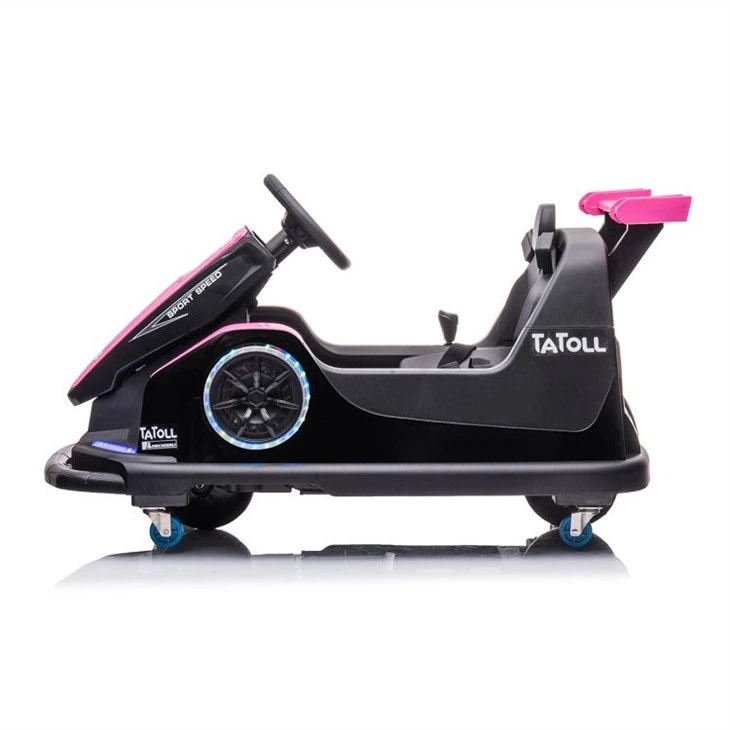
The load on the kart also plays a significant role in power consumption. This includes the weight of the rider, any additional accessories or modifications, and the terrain on which the kart is being driven. A heavier rider or rough terrain will require the motor to work harder, resulting in increased power consumption.
Factors Affecting Power Consumption
- Motor Efficiency: The efficiency of the motor is a critical factor in determining power consumption. A more efficient motor will convert a higher percentage of electrical energy into mechanical energy, reducing the amount of wasted energy and lowering power consumption. Modern brushless motors are generally more efficient than traditional brushed motors, making them a popular choice for 24V Drift Go Karts.
- Battery Capacity and Voltage: The battery is the power source for the go-kart, and its capacity and voltage can affect power consumption. A higher-capacity battery (measured in ampere-hours, Ah) will provide more energy and allow the kart to run for a longer period. However, it's important to note that a higher-voltage battery (such as a 24V battery) will generally consume more power than a lower-voltage battery (such as a 12V battery) when used with the same motor.
- Driving Style: The way the go-kart is driven can also impact power consumption. Aggressive driving, such as rapid acceleration and hard braking, will require the motor to work harder and consume more power. On the other hand, smooth and steady driving can help reduce power consumption and extend the battery life.
- Terrain and Conditions: The terrain on which the go-kart is being driven can have a significant impact on power consumption. Driving on flat, smooth surfaces will require less power than driving on hilly or rough terrain. Additionally, factors such as wind resistance and temperature can also affect power consumption.
Calculating Power Consumption
To calculate the power consumption of a 24V Drift Go Kart, you'll need to know the motor's power rating (in watts) and the average running time. The formula for calculating power consumption is:
Power Consumption (Wh) = Motor Power (W) x Running Time (h)
For example, if a 24V Drift Go Kart has a 300W motor and runs for 1 hour, the power consumption would be:
Power Consumption = 300W x 1h = 300Wh
To determine the battery capacity required to run the go-kart for a specific period, you'll need to divide the power consumption by the battery voltage. For example, if you want to run the 300W go-kart for 2 hours using a 24V battery, the required battery capacity would be:
Battery Capacity (Ah) = (Power Consumption (Wh) / Battery Voltage (V))
Battery Capacity = (300W x 2h) / 24V = 25Ah
Managing Power Consumption
As a supplier of 24V Drift Go Karts, I understand the importance of managing power consumption to ensure optimal performance and cost-effectiveness. Here are some tips to help you reduce power consumption and extend the battery life of your go-kart:
- Choose the Right Motor: Select a motor with an appropriate power rating for your needs. A higher-powered motor may provide more speed and performance, but it will also consume more power. Consider your driving style and the terrain on which you'll be using the go-kart when choosing a motor.
- Maintain the Battery: Proper battery maintenance is essential for maximizing its lifespan and performance. This includes charging the battery regularly, avoiding overcharging or discharging, and storing the battery in a cool, dry place.
- Drive Efficiently: Adopt a smooth and steady driving style to reduce power consumption. Avoid rapid acceleration and hard braking, and try to maintain a consistent speed. This will not only save energy but also improve the overall driving experience.
- Reduce Load: Minimize the weight of the rider and any additional accessories or modifications to reduce the load on the kart. This will require the motor to work less hard, resulting in lower power consumption.
- Use Energy-Efficient Accessories: If you need to add accessories to your go-kart, choose energy-efficient options. For example, LED lights consume less power than traditional incandescent lights.
Our Product Range
At our company, we offer a wide range of 24V Drift Go Karts to suit different needs and preferences. Our karts are designed with high-quality components and advanced technology to ensure optimal performance and reliability. In addition to our 24V Drift Go Karts, we also offer other products such as the 24V Parent-child Car, 12V Universal Draft Go Kart, and 12V Go Kart Ride On Car.
Contact Us for Purchase and洽谈
If you're interested in purchasing a 24V Drift Go Kart or any of our other products, please feel free to contact us. Our team of experts is available to answer your questions and provide you with more information about our products and services. We look forward to working with you to find the perfect go-kart for your needs.
References
- "Electric Vehicle Technology Explained" by James Larminie and John Lowry
- "Power Electronics: Converters, Applications, and Design" by Ned Mohan, Tore M. Undeland, and William P. Robbins
- "Battery Technology Handbook" by Thomas B. Reddy and Ganesh V. Subbarao


