What is the Sound Level of an Off Road Ride On Vehicle?
As a supplier of Off Road Ride On vehicles, I've often been asked about the sound levels of these exciting machines. Understanding the sound levels of off-road ride-on vehicles is crucial for several reasons, including safety, environmental impact, and user experience. In this blog post, I'll delve into the factors that influence the sound level of off-road ride-on vehicles, typical sound levels, and how these levels can impact various aspects of using these vehicles.
Factors Influencing Sound Levels
Several factors contribute to the sound level of an off-road ride-on vehicle. The most significant factor is the type of engine or power source. Gasoline-powered engines are generally louder than electric motors. Gas engines produce a combustion noise that can be quite pronounced, especially when the engine is under load. The size and design of the engine also play a role. Larger engines with more cylinders tend to be louder than smaller, single-cylinder engines.
The exhaust system of a gasoline-powered off-road vehicle is another major contributor to the sound level. A poorly designed or damaged exhaust system can increase noise emissions significantly. Aftermarket exhausts, which are sometimes installed to enhance performance or give the vehicle a more aggressive sound, can also raise the sound level above the manufacturer's specifications.
The terrain on which the vehicle is driven also affects the sound level. Driving on rough, rocky terrain will produce more noise as the wheels and suspension components interact with the ground. The tires themselves can also generate noise, especially if they have a aggressive tread pattern designed for off-road use.
The speed at which the vehicle is driven is another important factor. As the speed increases, the noise level generally rises as well. This is due to increased engine RPMs, more air resistance, and greater interaction between the tires and the ground.
Typical Sound Levels
The sound level of an off-road ride-on vehicle can vary widely depending on the factors mentioned above. On average, a gasoline-powered off-road vehicle can produce sound levels ranging from 80 to 100 decibels (dB) at the operator's ear. To put this in perspective, normal conversation is typically around 60 dB, and a lawnmower can produce around 90 dB.
Electric off-road ride-on vehicles are generally much quieter, with sound levels ranging from 50 to 70 dB. This makes them a more attractive option for those who are sensitive to noise or who plan to use the vehicle in areas where noise restrictions apply.


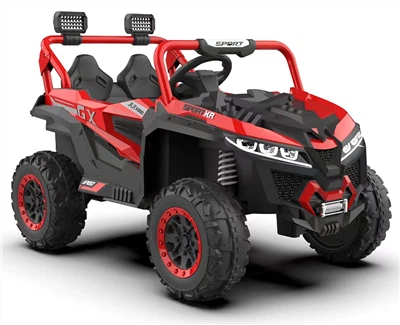
Let's take a look at some specific examples from our product range. The Mercedes Unimog UTV, a powerful and versatile off-road vehicle, has a gasoline engine that produces a sound level of around 90 dB at full throttle. This is within the typical range for a vehicle of its size and power.
Our 24V Jeep 4X4 Ride On Car, which is an electric vehicle, is much quieter, with a sound level of around 60 dB. This makes it a great choice for younger riders or for use in residential areas.
The 12V MIDDLE SUV Ride On Car is also an electric vehicle, and it produces a sound level of around 55 dB. Its quiet operation makes it suitable for indoor use or for areas where noise needs to be kept to a minimum.
Impact of Sound Levels
The sound level of an off-road ride-on vehicle can have several impacts. From a safety perspective, excessive noise can be a distraction for the operator, making it more difficult to hear other important sounds such as approaching vehicles or warning signals. It can also cause hearing damage if the operator is exposed to high noise levels for extended periods of time.
From an environmental perspective, high noise levels can disrupt wildlife habitats and cause stress to animals. In some areas, there are noise restrictions in place to protect the environment and the quality of life for residents. Using a quieter off-road vehicle can help to minimize the impact on the environment and avoid potential fines for violating noise regulations.
The user experience can also be affected by the sound level. Some riders enjoy the powerful, aggressive sound of a gasoline engine, while others prefer the quiet operation of an electric vehicle. The sound level can also impact the comfort of the ride, especially on longer trips.
Managing Sound Levels
If you're concerned about the sound level of an off-road ride-on vehicle, there are several steps you can take to manage it. For gasoline-powered vehicles, ensuring that the exhaust system is in good condition and properly maintained can help to reduce noise emissions. You can also consider installing a noise-reducing exhaust system or a muffler.
For electric vehicles, there isn't much you can do to reduce the already low sound level, but you can take steps to minimize additional noise from the tires and suspension. Choosing tires with a less aggressive tread pattern and ensuring that the suspension components are properly lubricated can help to keep the noise down.
Conclusion
In conclusion, the sound level of an off-road ride-on vehicle is influenced by several factors, including the type of engine, the exhaust system, the terrain, and the speed of the vehicle. Gasoline-powered vehicles are generally louder than electric vehicles, but both types can produce a range of sound levels. Understanding the sound levels of these vehicles is important for safety, environmental, and user experience reasons.
If you're interested in purchasing an off-road ride-on vehicle and have questions about sound levels or any other aspect of our products, please don't hesitate to contact us. We're here to help you find the perfect vehicle for your needs.
References
- "Noise Pollution and Its Effects on Human Health." World Health Organization.
- "Vehicle Noise and Vibration." SAE International.
- "Off-Road Vehicle Noise Regulations." Various state and local government websites.