
As a go-kart supplier, I've had the privilege of delving deep into the world of these thrilling machines. One of the most fascinating aspects of go-karts is their aerodynamics. Aerodynamics plays a crucial role in the performance, speed, and handling of a go-kart. In this blog post, I'll explore the key aerodynamic features of a go-kart and how they contribute to its overall performance.
The Basics of Aerodynamics in Go-Karts
Aerodynamics is the study of how air flows around an object. In the case of a go-kart, understanding aerodynamics is essential for optimizing its speed and handling. When a go-kart moves through the air, it encounters resistance, known as drag. Drag is the force that opposes the motion of the go-kart and can significantly reduce its speed. By minimizing drag and maximizing downforce, we can improve the go-kart's performance.
Streamlined Body Design
One of the most important aerodynamic features of a go-kart is its streamlined body design. A streamlined body reduces the amount of air resistance the go-kart encounters as it moves through the air. This is achieved by shaping the body in a way that allows the air to flow smoothly around it. A well-designed go-kart body will have a low profile, with a smooth, curved surface that minimizes turbulence.
The front of the go-kart is typically designed to be pointed, which helps to split the air and reduce drag. The sides of the body are also curved to guide the air around the wheels and other components. This not only reduces drag but also helps to improve the go-kart's stability at high speeds.
Front and Rear Wings
Another important aerodynamic feature of a go-kart is the use of front and rear wings. Wings are designed to generate downforce, which is the force that pushes the go-kart down onto the track. Downforce is essential for improving the go-kart's traction and handling, especially at high speeds.
The front wing is typically located at the front of the go-kart, just above the wheels. It is designed to generate downforce on the front wheels, which helps to improve steering and handling. The rear wing is located at the back of the go-kart and is designed to generate downforce on the rear wheels. This helps to improve traction and stability, especially when cornering.
The size and shape of the wings can have a significant impact on the go-kart's performance. A larger wing will generate more downforce, but it will also increase drag. Therefore, it's important to find the right balance between downforce and drag. The angle of the wings can also be adjusted to optimize the go-kart's performance for different track conditions.
Sidepods
Sidepods are another aerodynamic feature that can be found on some go-karts. Sidepods are located on the sides of the go-kart, just behind the front wheels. They are designed to channel the air around the engine and other components, which helps to reduce drag and improve cooling.

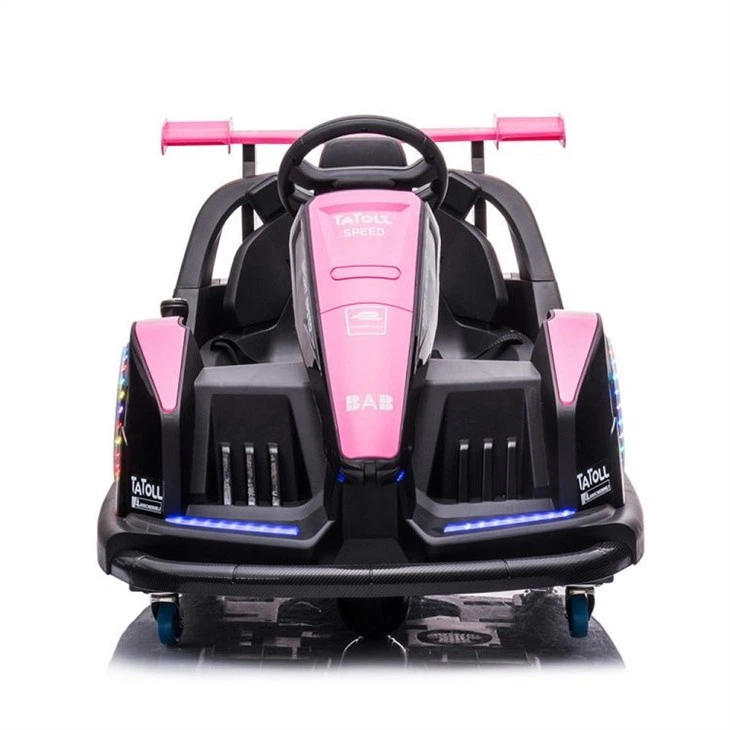
The shape and size of the sidepods can have a significant impact on the go-kart's performance. A well-designed sidepod will have a smooth, curved surface that allows the air to flow smoothly around it. The sidepods can also be designed to direct the air towards specific components, such as the radiator or brakes, to improve cooling.
Underbody Aerodynamics
The underbody of a go-kart is also an important area for aerodynamic optimization. The underbody is the area between the wheels and the ground, and it can have a significant impact on the go-kart's performance.
A well-designed underbody will have a smooth, flat surface that allows the air to flow smoothly underneath the go-kart. This helps to reduce drag and improve the go-kart's stability. Some go-karts also feature a diffuser, which is a device located at the rear of the underbody. The diffuser is designed to increase the speed of the air flowing underneath the go-kart, which creates a low-pressure area that helps to suck the go-kart down onto the track.
Impact of Aerodynamics on Performance
The aerodynamic features of a go-kart can have a significant impact on its performance. By reducing drag and increasing downforce, we can improve the go-kart's speed, acceleration, and handling.
A go-kart with a well-designed aerodynamic package will be able to reach higher speeds on the straightaways and corner more quickly and smoothly. This can give the driver a significant advantage on the track. In addition, a go-kart with good aerodynamics will be more stable at high speeds, which can improve the driver's confidence and reduce the risk of accidents.
Our Go-Kart Offerings
At our company, we offer a range of go-karts with advanced aerodynamic features. Our 12V Universal Draft Go Kart is designed with a streamlined body and adjustable wings to optimize performance. The 24V GO KART DRIFT CAR features a high-performance aerodynamic package that includes front and rear wings and sidepods. And our 12V DRIFT GO KART RIDE ON CAR is perfect for younger drivers, with a lightweight design and aerodynamic features that make it easy to handle.
Conclusion
In conclusion, aerodynamics plays a crucial role in the performance of a go-kart. By understanding the key aerodynamic features of a go-kart and how they work, we can optimize its design to improve speed, acceleration, and handling. At our company, we are committed to providing our customers with high-quality go-karts that are designed with the latest aerodynamic technology. If you're interested in learning more about our go-karts or would like to discuss your specific requirements, please don't hesitate to contact us. We look forward to working with you to find the perfect go-kart for your needs.
References
- Milliken, W. F., & Milliken, D. L. (1995). Race Car Vehicle Dynamics. Society of Automotive Engineers.
- Puhn, D. (1992). The Racing and High-Performance Tire. Society of Automotive Engineers.
- Katz, J. (2000). Low-Speed Aerodynamics. Cambridge University Press.